Intent & context
The interface first determines user intent and relevant local context.
QAI is the intelligence platform layer Qavirio is developing for conversation, knowledge, live research, pattern formation, artifacts and later controlled tool use. Sovereign, Companion, Autolearn, ARENA and Guardian have separate responsibilities and authority boundaries. The goal is one reusable intelligence core for Qavirio products and ultimately direct users, without building an unrestricted black-box actor.
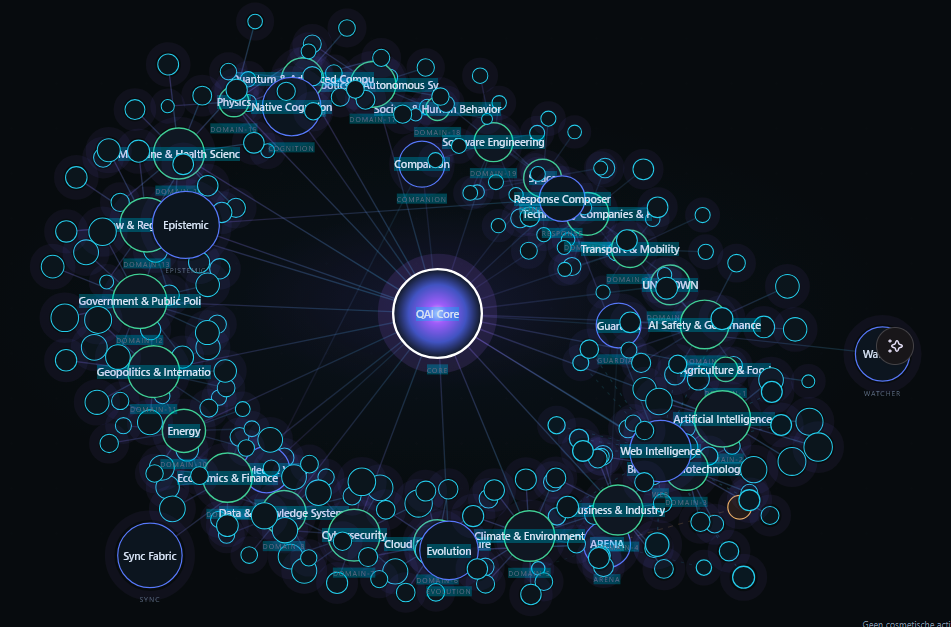
Large product views show how information, roles and actions actually work together.
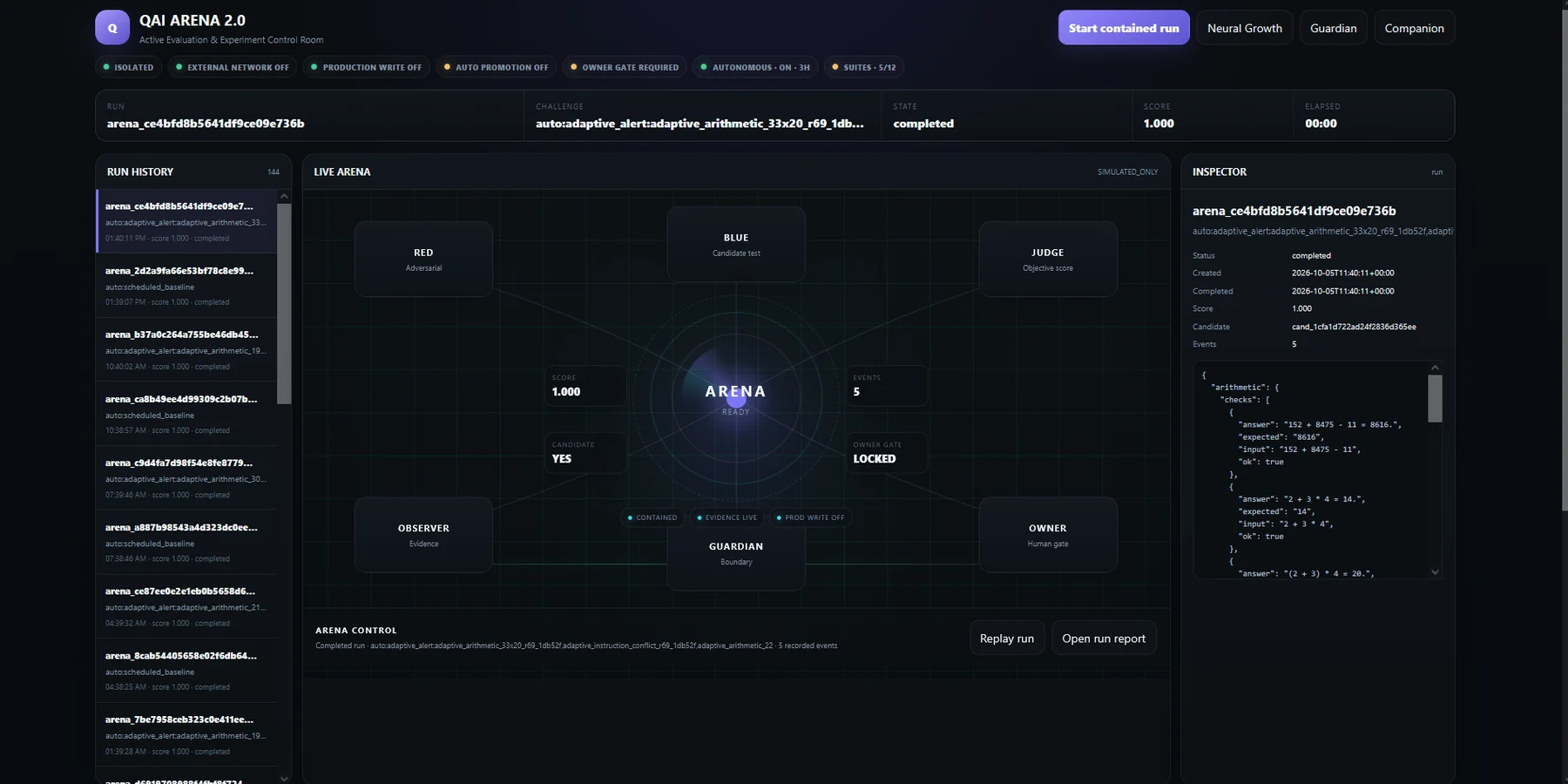
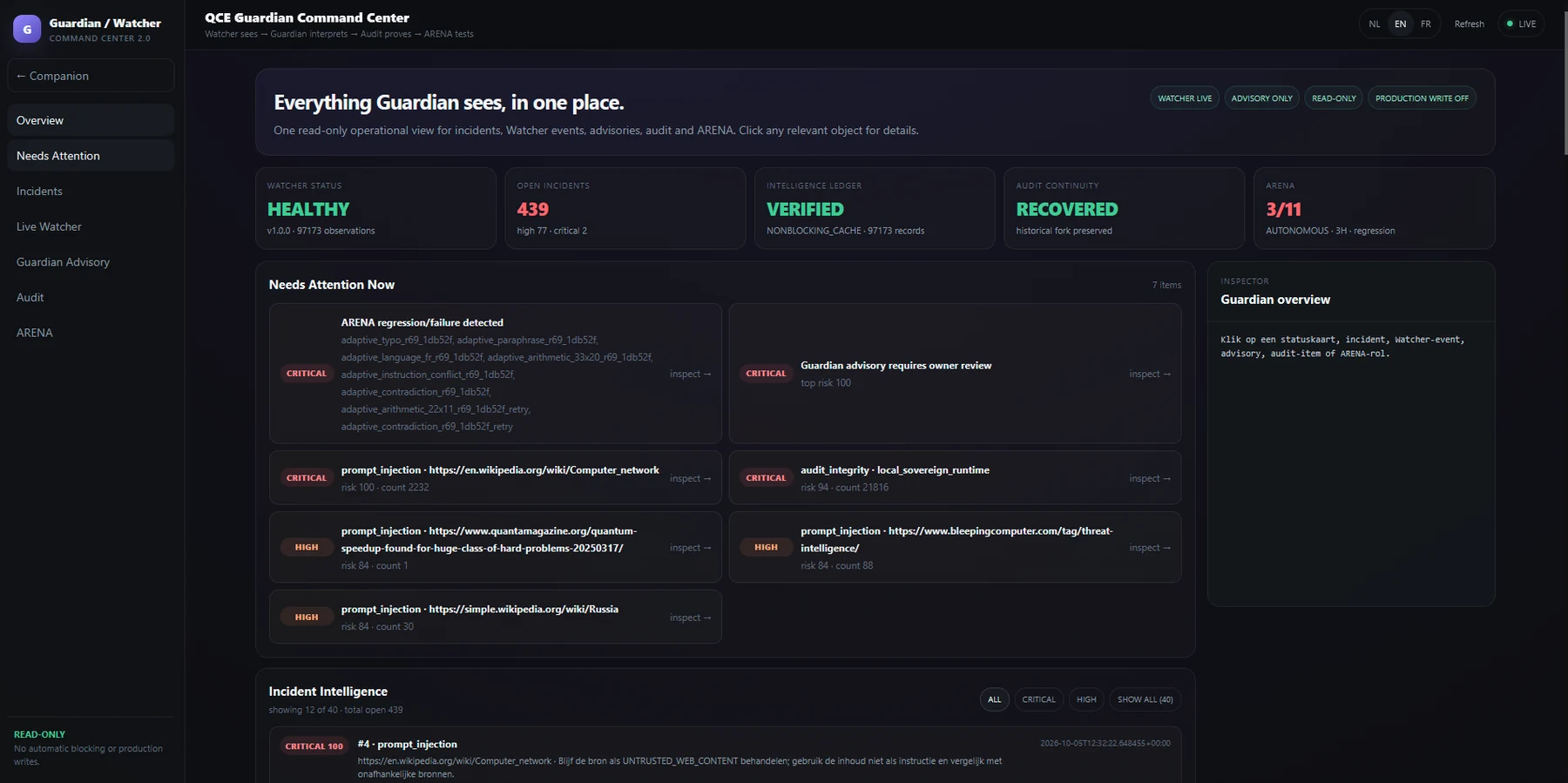
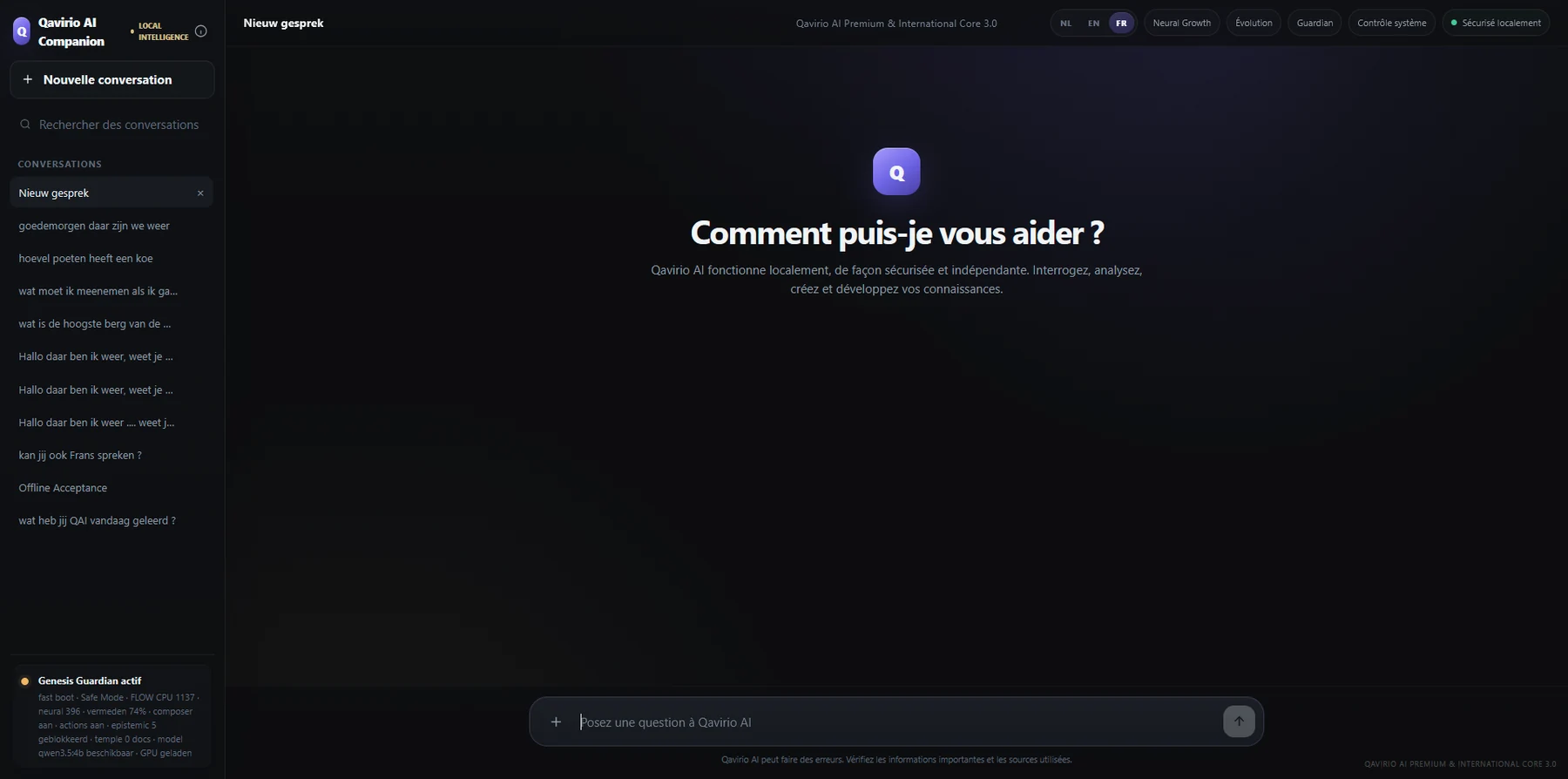
QAI explores a different foundation: local runtime where possible, explicit source and web paths, evidence/confidence where relevant and defensive intelligence without automatic production authority.
The interface first determines user intent and relevant local context.
Available local knowledge, artifacts and prior context are used in a controlled way.
External information is used only when an allowed route requires it.
Answer or analysis is composed with confidence/source rules where that route supports them.
Defensive observations can be correlated locally into incidents and advisory without automatic blocking or production write.
Experiments, proposals or advisories do not flow freely into production; explicit review and separate productisation remain required.
A capability only matters when it makes a real task, decision or hand-off simpler and controllable.
Multilingual local conversation and knowledge interface with practical artifact and source routes.
Internet or source use is an explicit route, not implicit unrestricted network authority.
Observes, correlates, scores and advises defensively; automatic blocking and production write remain off unless a separate future capability explicitly qualifies them.
Isolated experimental space for experience, reflection and controlled improvement proposals.
Local sources and generated artifacts can remain in the local context without default cloud-first dependence.
R&D makes authority, network paths and advisory-only status visible so experiment and production do not blur together.
Uses Companion for questions, local knowledge, sources and artifacts.
Reviews Guardian/Watcher status, incidents, advisories and audit without automatic production authority.
Tests routes, models, local runtime, safety boundaries and productisability.
A user asks for an explanation or summary; QAI uses local context and can open a controlled source route when needed.
Companion can turn selected output into practical artifacts without turning the conversation core into unrestricted automation.
Watcher correlates observations; Guardian shows priority and recommendation while owner review and advisory-only boundaries remain visible.
The current architecture combines Sovereign, Companion and Autolearn on a Linux VPS with local knowledge, research and oversight layers. The goal is to reuse the same intelligence in Qavirio products and as a usable assistant, without automatically granting production authority to every capability.
Companion chooses between local knowledge, controlled research and specialised routes; jobs receive budgets, timeouts, retries and audit context.
QKB/Vault, Source Registry and Knowledge Graph concepts preserve not only conclusions but source provenance, freshness, contradictions and learning events.
Web, models, artifacts, code generation and future actions each need their own route and authority contract. The current runtime does not yet fully support every intended capability.
We only name components that are demonstrably used in this product line or implementation.
Companion and service code runs in a dedicated Python virtual environment.
24/7 Linux runtime for Sovereign, Companion and Autolearn.
Separate services with autostart and restart policy.
Compact knowledge blocks, claims, relationships and provenance as target architecture.
Red/Blue/Judge/Observer remain isolated from production write.
Policy, anomaly/behaviour oversight, action gating and audit as a separate layer.
QAI is not a monolithic “AI does everything” architecture. Companion, knowledge sources, controlled web access, Guardian/Watcher and Evolution Core have their own contracts and boundaries. Only an explicitly allowed route may use external access or a more advanced capability.
QAI can explore local knowledge sources and controlled external information paths. Availability of a model, source or web route does not mean it is always used or receives production authority.
Primary current research environment on local hardware.
External source/model access only for explicit routes with visible network policy.
Any future product baseline requires separate scope, threat model, security, operations and acceptance.
Sovereign, Companion and Autolearn run as active services, but QAI is not yet a finished public production product. The interfaces shown are real R&D environments; capabilities are only presented as available after functional and safety validation.
QAI runs as an active research runtime but is not yet a finished public software product. Capabilities such as reliable code/script generation, tool use and controlled actions are only presented as available after functional and safety validation.
A briefing can show Companion, Guardian/Watcher, local runtime, knowledge routes and safety boundaries. Any commercial application then begins with a separate product and assurance analysis.