
OBSERVE
Collect approved security events and build context around assets, identities and behaviour.
Sentinel is being developed as a defensive platform that observes security events, analyses relationships, makes risk explainable and places response under explicit policy and authority boundaries. The goal is not more alerts, but better-supported action while preserving evidence.
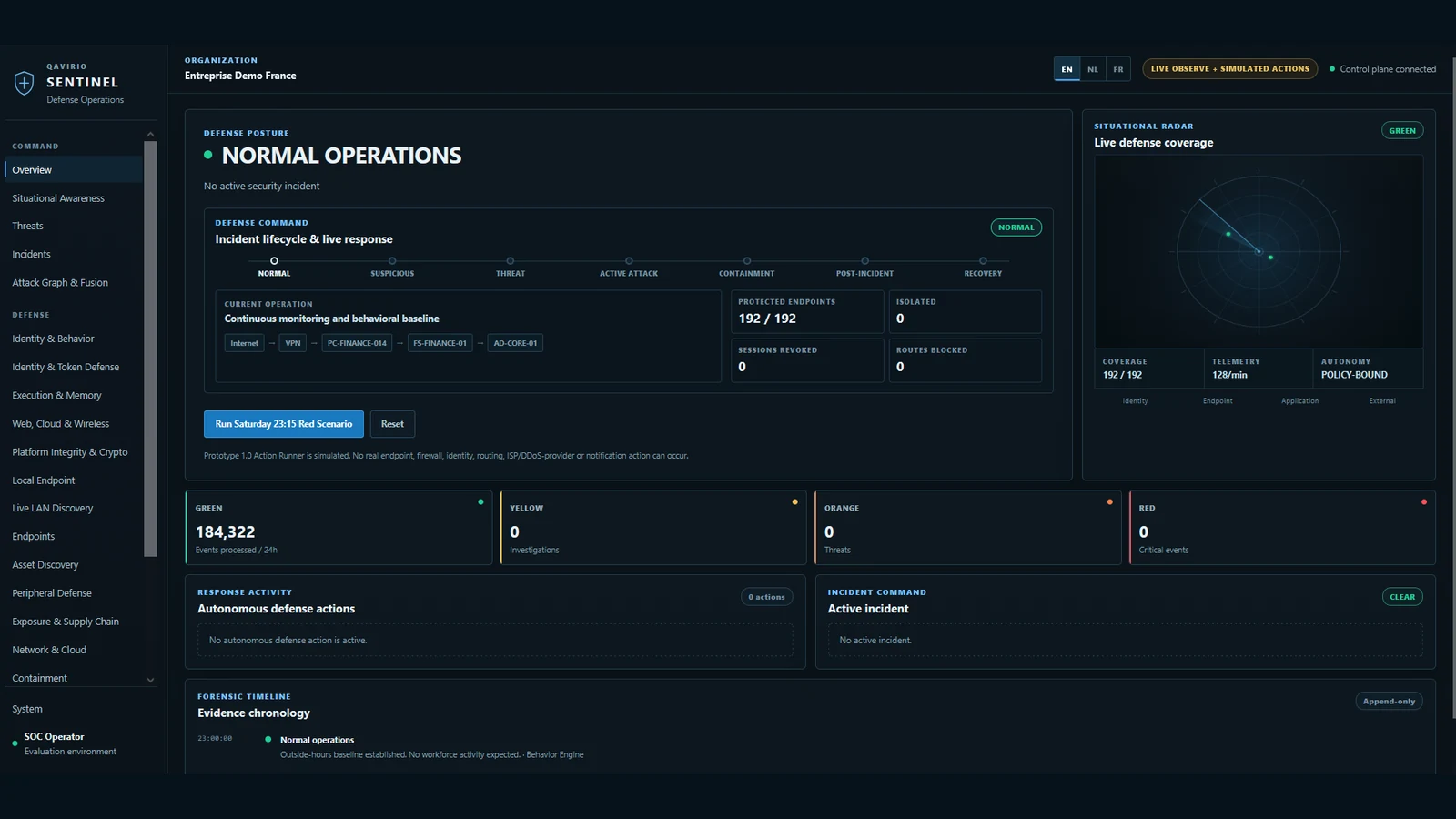
Large product views show how information, roles and actions actually work together.
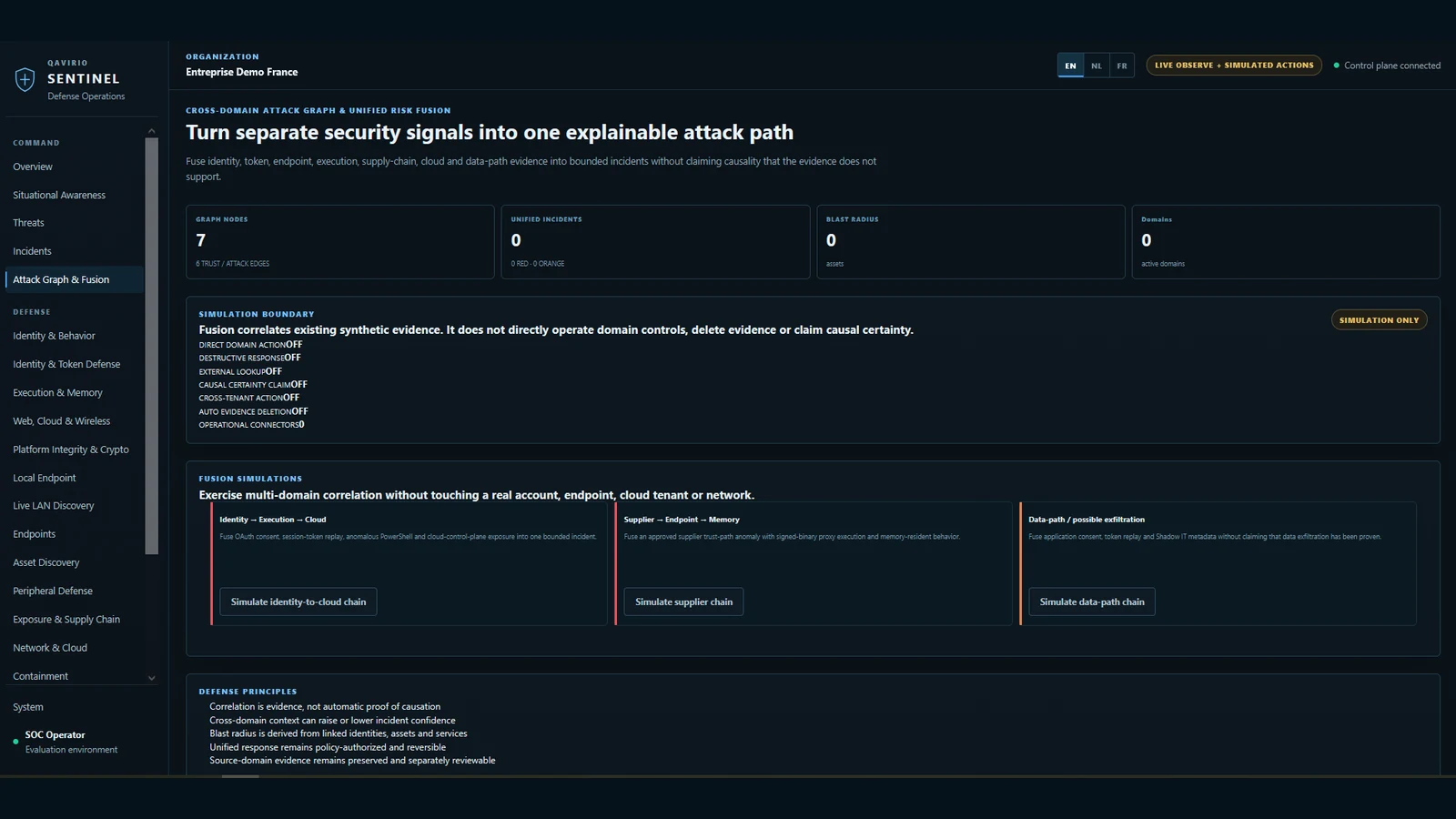
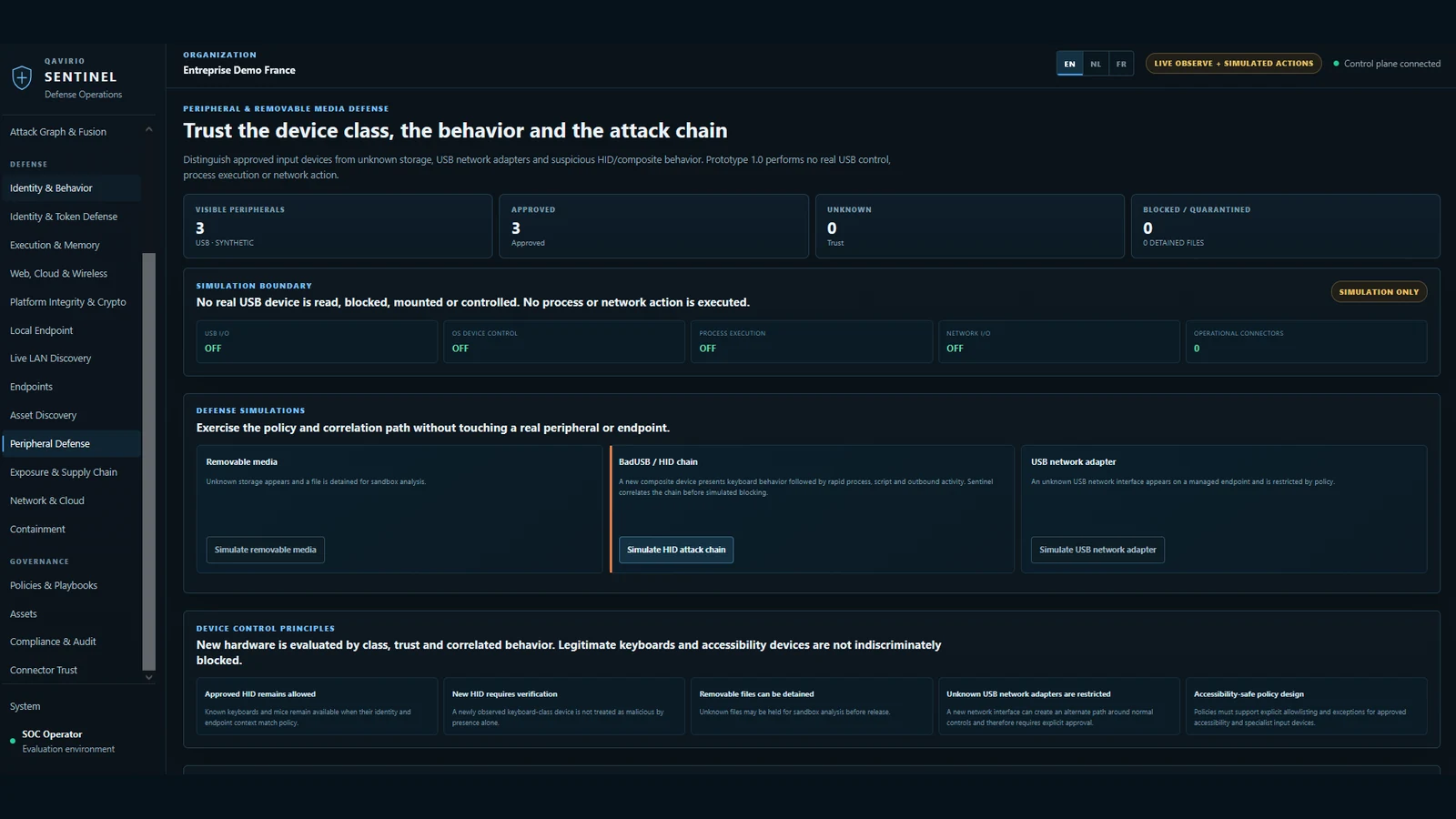
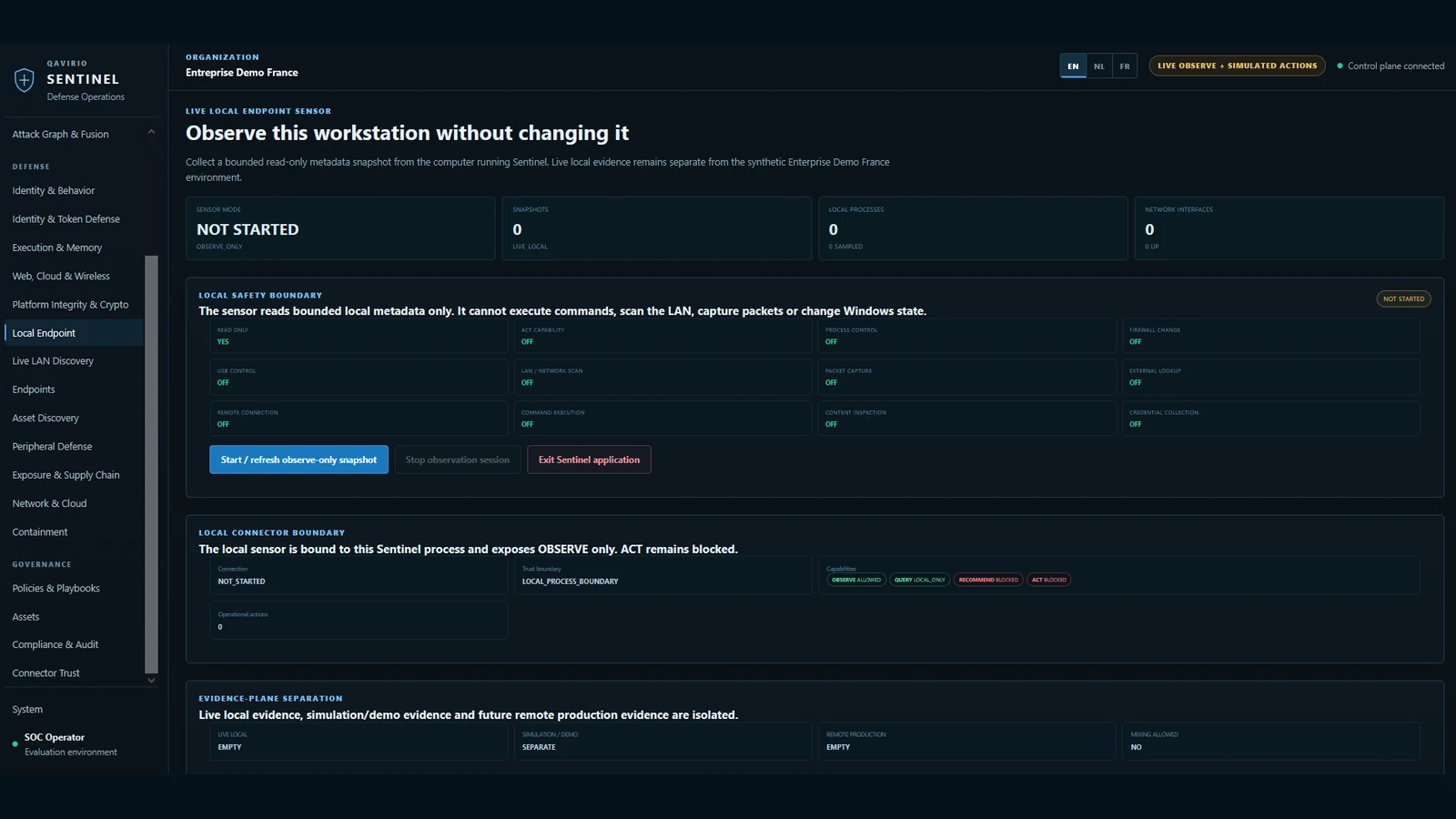
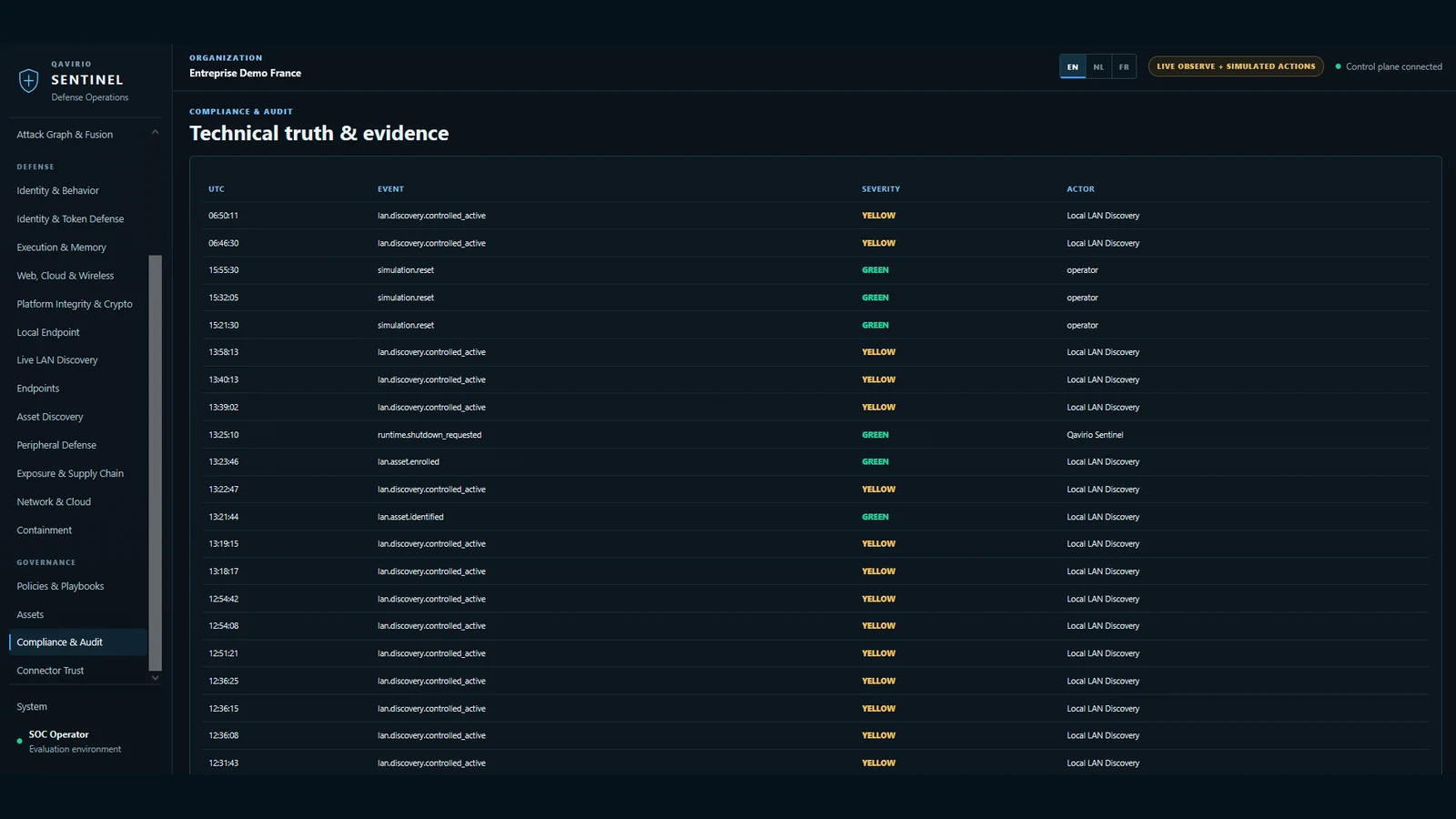
Modern environments produce large volumes of telemetry and alerts. Sentinel explores a model where observation, AI-assisted analysis, policy and human control remain separated. The platform is explicitly defensive and is not designed as a black box allowed to make unrestricted production changes.
Collect approved security events and build context around assets, identities and behaviour.
Analyse correlations, deviations, confidence and alternative explanations.
Evaluate possible response against policy, role, severity and explicit authority.
Only permitted, bounded response; high-impact actions remain policy- and authorisation-driven.
A capability only matters when it makes a real task, decision or hand-off simpler and controllable.
Relate security events to identities, endpoints, services and network context.
Use confidence, alternative explanations and correlation without giving AI authority policy does not grant.
GREEN, YELLOW, ORANGE and RED structure severity; response remains separately bounded by policy.
Preserve timeline, actor, policy, outcome and relevant hashes/references for reconstruction.
Containment is designed to be bounded, authorised and reversible where possible.
On-premise/private cloud remains the primary design model for sensitive enterprise and public environments.
Investigates alerts, incident context, severity and evidence.
Governs policy boundaries, authority and assurance requirements.
Assesses deployment, integrations, endpoints and operational recovery.
Reviews timeline, controls and rationale without operating security controls.
An event is not merely marked “suspicious”; the analyst sees involved assets, earlier events and the basis for severity.
A possible containment action is allowed only when configured policy, role and severity explicitly permit it.
A team can review which signals, decisions, overrides and actions led to the outcome.
Sentinel 2.1.0 separates detection, policy, evidence and qualification. The LIVE_LOCAL runtime observes; operational connectors remain zero and ACT remains blocked in the qualified pilot line.
The pilot UI/API operates locally with per-runtime browser session plus CSRF, Host/Origin and cross-origin boundaries.
Installed core, clean-machine evidence, external pilot qualification and independent review are treated as separate assurance planes.
Tamper tests operate on a temporary staging copy of the installed release; the real installation is not modified to prove a negative test.
We only name components that are demonstrably used in this product line or implementation.
Local installable pilot line and lifecycle qualification.
Automation for clean-machine, install, acceptance, tamper and lifecycle checks.
Release, qualification and support evidence as structured review data.
Hash references for installer, release and review bundles.
Publisher identity is a separate trust gate from byte integrity.
The pilot control plane stays local and is not published by default as a remote administration surface.
Sentinel follows a layered design: connectors/events provide observations; analysis/correlation produces hypotheses and severity; policy determines what is allowed; audit preserves what happened. Failure of an external connector must not take down the detection core.
A connector is only described as integrated after contract, authentication, failure handling, rate/abuse controls and relevant vendor or customer acceptance are actually complete. Researched or planned connectors are labelled accordingly.
Primary enterprise/public-sector direction so raw telemetry can remain under customer control.
Controlled external intelligence/update channels where explicitly permitted, without automatic telemetry export by default.
Local analysis, external AI optional/off and controlled update bundles as a deployment direction for stricter environments.
External Pilot Qualification & Deployment Assurance R1. A pilot release candidate is not a claim of broad production readiness; external pilot, independent assurance, signing and customer-specific acceptance remain separate gates.
A Pilot RC is not the same as broad production readiness. External pilot qualification, publisher signing, independent security review and customer-specific acceptance remain separate gates.
An initial discussion is about goals, users, existing systems, risks and outcomes — not about selling as much software as possible.